
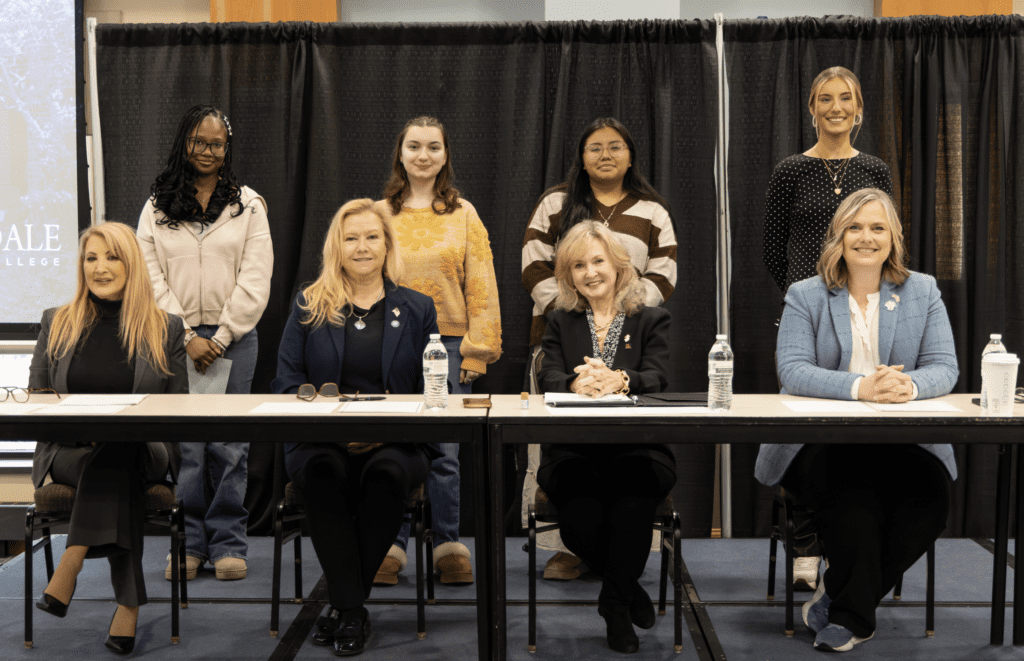
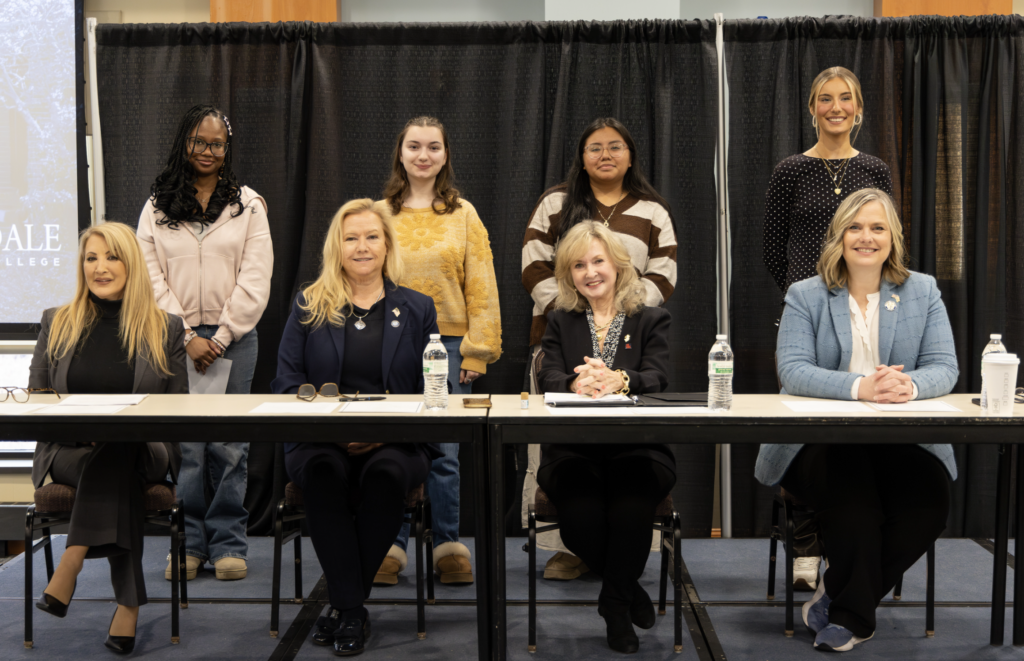
In celebration of Women’s History Month, Brookdale welcomed an inspiring group of public leaders for a panel discussion on civic engagement, leadership, and the importance of finding one’s voice in the community. The event brought together students, faculty, and community members for a candid conversation about public service and the experiences that shaped four accomplished women leaders.
The lineup brought credibility and range: New Jersey Assemblywoman Vicky Flynn, Brookdale Board Chair Barbara Horl, Brookdale Trustee Dr. Stephanie D’Alessio, and Monmouth County Surrogate Maureen T. Raisch. Together, they offered a candid look at leadership, persistence, and why civic participation isn’t just for “political people.”
The tone was warm from the start, especially as students introduced each panelist, setting the stage for a program that centered on community, mentorship, and the power of saying “yes” when opportunity shows up.
A panel grounded in public service and real life
Each speaker brought a distinct lens to civic engagement:
Assemblywoman Vicky Flynn, who has served in the New Jersey General Assembly since 2022 and now serves as Parliamentarian (as of January 2026), offered an inside view of public leadership, balancing policy priorities, family life, and the realities of representation. She also spoke directly to students about why civic engagement matters, even when it feels frustrating or distant.
Board Chair Barbara Horl shared a powerful “full circle” story about how Brookdale helped her gain the confidence to return to college after a 15-year hiatus, ultimately graduating Magna Cum Laude from Douglass College of Rutgers University. Her career in New Jersey state government spans roles across education, transit, women’s advocacy, and legislative affairs, and she discussed how civic engagement often starts small: asking questions, organizing others, and simply showing up.
Dr. Stephanie D’Alessio, Assistant Division Director for the New Jersey Youth Challenge Academy (NJ Department of Military Affairs), connected civic life to education and opportunity, especially for underserved and at-risk youth. With more than 25 years of experience across education, youth development, and program leadership, she emphasized that policy decisions don’t live in a vacuum; they shape funding, access, and real outcomes for students and families.
Surrogate Maureen T. Raisch spoke from the perspective of a constitutional office that many residents learn about only in difficult moments. As Monmouth County Surrogate, she oversees probate, guardianship, and adoption matters, and manages the Surrogate Intermingled Trust Fund—safeguarding and investing more than $20 million on behalf of minors while also preserving county records dating back to the 1700s. She highlighted her focus on access and modernization, including multilingual, AI-driven systems and a step-by-step online probate filing platform, and noted national recognition in 2025 as an AI 50 Public Sector Innovator.
“The most influential woman in your life…”
One of the first questions asked panelists who had influenced them most. The responses sparked an immediate connection. Again and again, the answers pointed to family members, particularly mothers and grandmothers who modeled resilience, service, and the courage to seize opportunities.
The stories felt deeply relatable. Rather than a highlight reel of titles, they reminded students that leadership often begins with what you see at home. It may be someone volunteering, advocating for others, or simply refusing to give up when life becomes difficult.
Barriers, breakthroughs, and the “keep going” theme
When the conversation turned to obstacles, the panelists were candid. They spoke about being the only woman in a room, feeling underestimated, or battling self doubt, including imposter syndrome.
But the message remained consistent. Barriers are real, and they can be overcome.
One panelist encouraged students not to let setbacks define them but instead to let challenges strengthen them. Others advised students to look for mentors, sometimes without formally calling them mentors, by observing how strong leaders navigate disagreement, responsibility, and adversity.
Civics education: “Yes and yes again.”
A standout moment came during the discussion about civics education. Panelists emphasized that students deserve a clearer understanding of how local, county, and state government function and how decisions made in Trenton or a town hall meeting ripple into everyday life.
Those decisions affect issues students experience directly, including tuition, financial aid, public policy, and even everyday expenses such as auto insurance.
The conversation was practical. If people do not understand who is responsible for what in government, they may not know where to seek help or how to advocate for change. Panelists also noted that low voter turnout and public confusion are not inevitable. They can be addressed through stronger civic education, better access to information, and more opportunities for students to participate.
Students were encouraged to support civic learning initiatives, including signing a petition that endorses expanded civics education.
Advice to students who want to make a impact
When asked what advice they would give to young people interested in public service or those who feel disconnected from politics, the panelists offered practical guidance.
Start local by attending meetings, learning about community issues, and volunteering.
Raise your hand because opportunities often go to people willing to show up consistently.
Get in the room since decisions are made by those who are present.
Do not wait until you feel ready because confidence often comes after taking the first step.
And perhaps most relatable of all: surround yourself with people who lift you up, not people who drain you. One panelist put it plainly: if someone’s toxic, take space, protect your peace, and keep moving forward.
As the conversation came to a close, the panel’s message was clear. Civic engagement begins with curiosity, grows through participation, and thrives when individuals believe their voices matter.
The Women’s History Month panel served as both a celebration of women’s achievements and a reminder that the next generation of leaders may already be sitting in Brookdale classrooms today.